 Sign up to receive news and updates and get my free report:
“3 Tips to Fall Asleep as Soon as Your Head Hits the Pillow”
- Northshore Acupuncture Center5225 Old Orchard Road, Suite 24A
Skokie, IL 60077(815) 814-1319 Follow Us!


Latest Articles:
- • Outdoor Activities Best Enjoyed During Spring •
- • The Health Benefits of Spring Cleaning •
- • Delicious Recipes Using Spring Fruits and Vegetables •
Acupuncture
Acupuncture for Healthy Weight Loss

In the United States, an estimated 300,000 people a year die from obesity.
In several studies over the last five years, researchers have shown patients who receive regular acupuncture treatments see faster weight loss results than those who do not. In each case, the acupuncture treatments were combined with dietary and lifestyle changes also aimed at weight loss, but the patients who got acupuncture saw better results than those who focused on dietary and lifestyle changes alone. continue reading
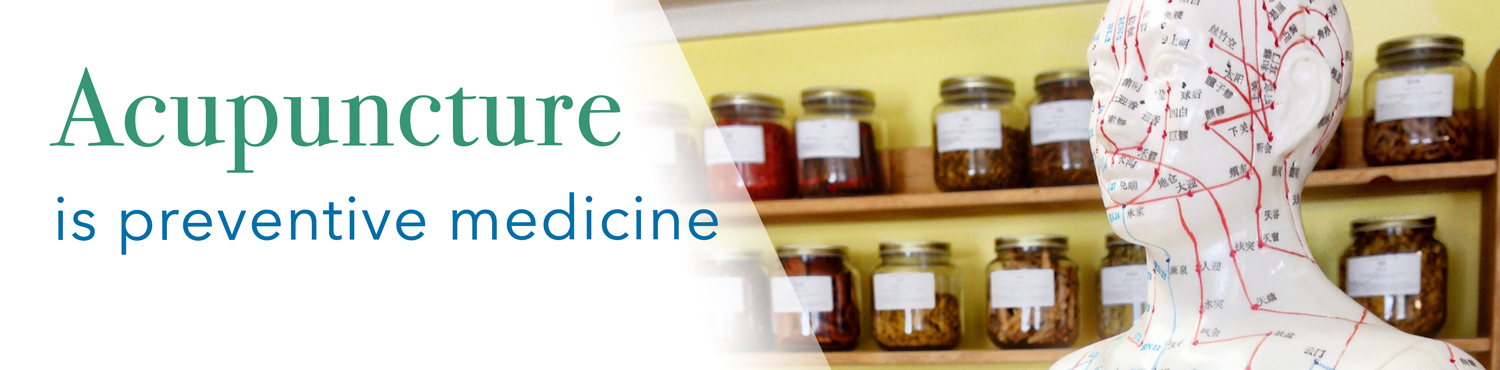
Acupuncture is Preventive Medicine
I think we all know someone, or maybe it’s even ourselves, who lives by the refrain, “If it’s not broken, don’t fix it.”
Often used to put off replacing outdated tools or technology, the phase can be connected to how we view healthcare as well. It can be hard to think about our physical health until it is a problem. Something we take for granted, until, as it were, it’s broken. Why would we spend time and money on something before it’s necessary? continue reading
Community Acupuncture at Fleetwood-Jourdain
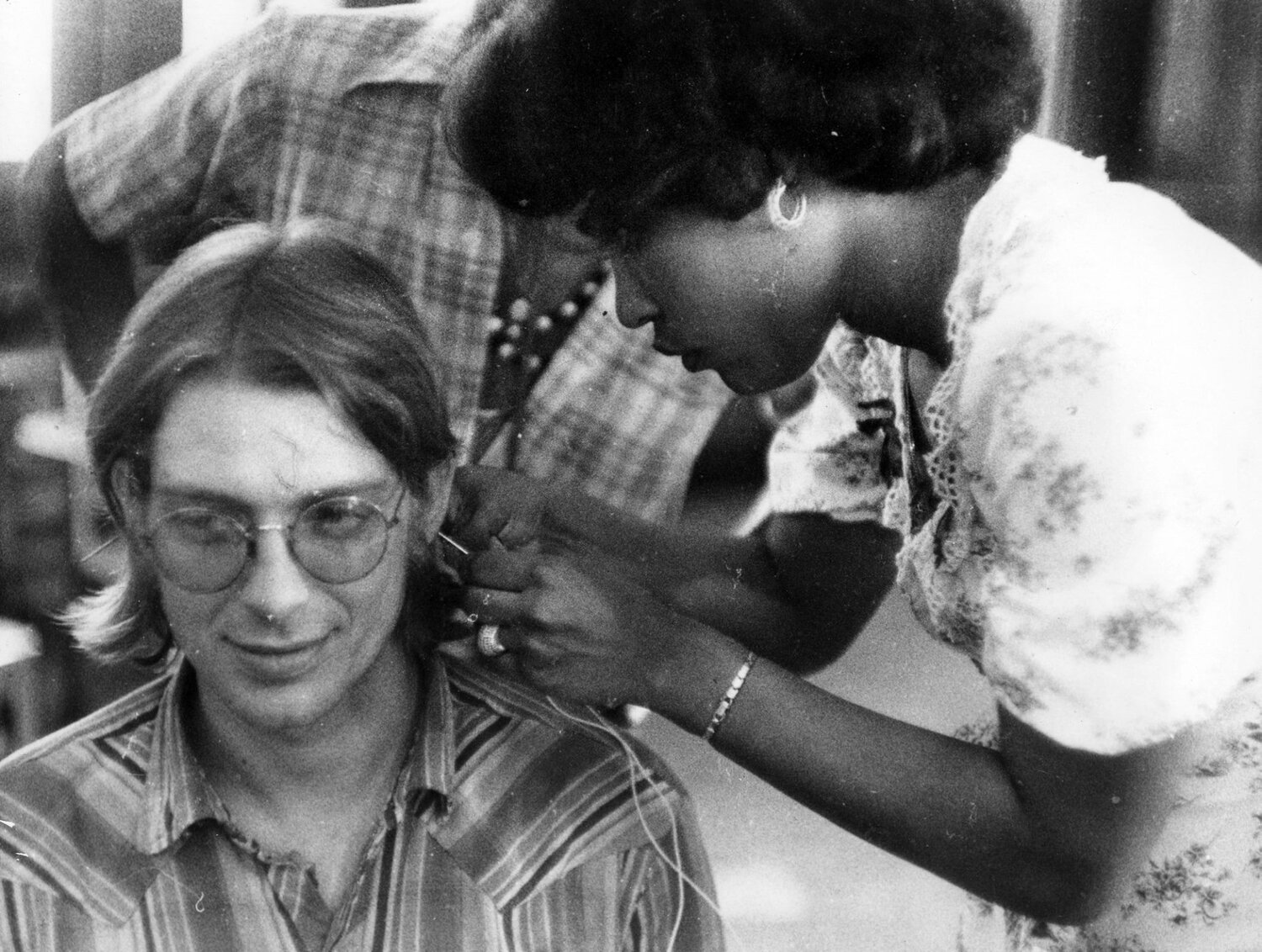
Northshore Acupuncture Center offers monthly affordable community acupuncture treatments where attendees reflecting the diversity of our community in terms of income level, age, race, gender, sexuality, religion, ethnicity and physical abilities gather for healing.
Community acupuncture sessions are held on the second and fourth Thursdays of each month at the Fleetwood-Jourdain Community Center:
 Feb 12 & 26, 2026 Mar 12 & 26, 2026 Apr 9 & 23, 2026 May 14 & 28, 2026
You can register for sessions by calling Fleetwood-Jourdain at (847) 448-8254 or at cityofevanston.org/recreation. The cost is $11 per month for Evanston residents and $31 per month for non-residents.
During the community acupuncture experience, participants will be treated in a group, sitting comfortably in chairs, fully clothed. The acupuncturist (Amy) will place up to five small, sterilized disposable needles into specific sites on each ear. If you don’t love needles, magnets or Vaccaria seeds can be taped on an ear acupressure point instead.
The five-needle acupuncture treatment is used as an integrated therapy for addiction along with counseling, support groups and 12 step programs. The protocol reduces cravings and minimizes withdrawal symptoms for more than drug or alcohol addictions – it is also helpful if you are experiencing withdrawal from caffeine, nicotine or sugar. The protocol is beneficial for anxiety, trauma, PTSD, sleep issues, and stress.
Additional benefits from the treatment may include: calmness, better sleep, stress relief, pain relief, and a stronger connection with your inner resilience.
The five points are: (1) The Autonomic Point which calms the nervous system and helps with overall relaxation; (2) the Shen Men or “spirit gate,” which reduces anxiety and nervousness; (3) the Kidney Point, for calming fears and healing internal organs; (4) the Liver Point for detoxification, blood purification, and processing anger; and (5) the Lung Point, which helps with letting go of grief.
We provide community auricular acupuncture sessions in a format similar to that developed by Dr. Mutulu Shakur, the Black Panthers and the Young Lords at the Lincoln Hospital Detox Center in the South Bronx in the 1970s as a tool for liberation and community health.
The Black Panthers and Young Lords were instrumental in broadening the use of acupuncture beyond the Asian community in the United States. They used acupuncture to help fill the gaps in quality healthcare for people of color. To learn more, I recommend reading Dr. Dandridge’s The Unusual Tale of Acupuncture, Racism and African American History in the USA, and watching the documentary Dope is Death.
Any money raised from the regular sessions beyond the cost of the supplies are used to provide subsidized acupuncture treatments for community members experiencing hardship.
Acupuncture for Anger Management
Anger is the emotion associated with springtime in Traditional Chinese Medicine. For most of us, we consider anger a bad emotion, something to avoid or get rid of, so why would it be one that TCM would shine a light on?
Well, no emotion is inherently good or bad, it’s how we deal with challenging emotions that can end up hurting ourselves or those we love. continue reading
Regrowth: Spring and Traditional Chinese Medicine
Three thousand years ago, when Chinese medicine was first being practiced, there was no light or electricity. No way to mask the darkness of winter. No way, either, to ignore the longer, warmer days of springtime. Because it is such an ancient practice, a lot of the wisdom of Traditional Chinese Medicine comes from a time when people spent much more time outside, paying attention to the natural world around them. continue reading
5 Acupoints for Anxiety You Can Administer Yourself
“At a time when people are so conscious of maintaining their physical health by controlling their diets, exercising, and so forth, it makes sense to try to cultivate the corresponding mental attitudes too.”
– HH the Dalai Lama, 1963
It can be easy to forget how much our mental state can affect our physical well-being. In Traditional Chinese Medicine, that connection is evident in the treatment strategies, but it is also true that when we are feeling bad, we don’t always think to look at our minds. It works both ways. continue reading
Acupuncture for Diabetes
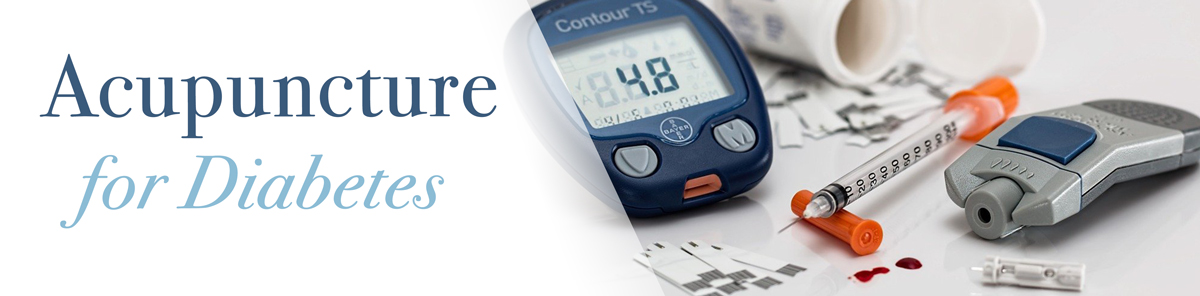
More than 34 million Americans have diabetes, and approximately 90 percent of them have type 2 diabetes, according to the Centers for Disease Control and Prevention.
Type 2 diabetes, while its exact cause is unknown, develops when the body becomes resistant to insulin or the pancreas doesn’t produce enough insulin. Because of this, treatment often involves taking “insulin sensitizers” or medication that helps the body increase its sensitivity and therefore ability to process insulin, keeping the blood sugar from getting too low. Unfortunately, this medication often causes side effects, including weight gain and anemia. continue reading
Acupuncture Wrapped: An overview of some of the most exciting discoveries in 2020

As we enter a new year, it is natural to want to look back on the last one. As humans, we have the gift and the hurdle of marking time, so it can feel helpful to recall memories we want to hold on to or look for lessons we can take with us.
To that end, here are three categories in which research into the type, application and efficacy of acupuncture saw significant advancements in 2020, findings that will certainly help guide us as we move forward. In a year that saw so much focus on our health, these findings offer some good news in the fields of pain management without opioids, migraine headaches, and insight into why it is that acupuncture is effective as an anti-inflammatory. continue reading
Intention setting in the new year
It’s that time of year again: the time when many of us engage in the practice of setting a new year’s resolution.
It seems, though, that hand-in-hand with new year’s resolutions is the prediction of inevitable failure. That as soon as you pick a resolution, you won’t actually make it through the whole year sticking with the new behavior, or that by the third week of January the resolution will be out of sight, out of mind. So, I wanted to offer some tips on how to join in the tradition in a way that might foster more success, by incorporating some wisdom from traditional Chinese medicine. continue reading
You’re Getting Sleepy…
Enjoying Naps in the Winter Season
Most mammals are polyphasic sleepers, meaning that they sleep for short periods throughout the day. For humans, days are divided into two distinct periods, one for sleep and one for wakefulness, which is a monophasic sleep pattern. However, this may be a product of living in an industrialized world and not the natural sleep pattern of humans. In many cultures, young children and elderly take naps midday. Our bodies are programmed for two periods of intense sleepiness a day: between 2 and 4 am and 1 and 3 pm. Unfortunately, despite our biological vestige, we are having to consolidate our sleep into one long period. continue reading
